The moment a construction crew finishes a street and your network passes a neighborhood, a clock starts. Every day between that moment and the day a customer pays their first bill is revenue you cannot get back. Multiply that gap across hundreds or thousands of addresses and the financial impact moves from operational inconvenience to a business-critical problem.
Most operators know intuitively that things slow down somewhere between network live and billing. What they often cannot tell you is exactly where, or what it is actually costing them. The answer sits across six lifecycle stages, and the delay at each one compounds into a revenue gap that is both calculable and preventable.
Stage 0: Service available
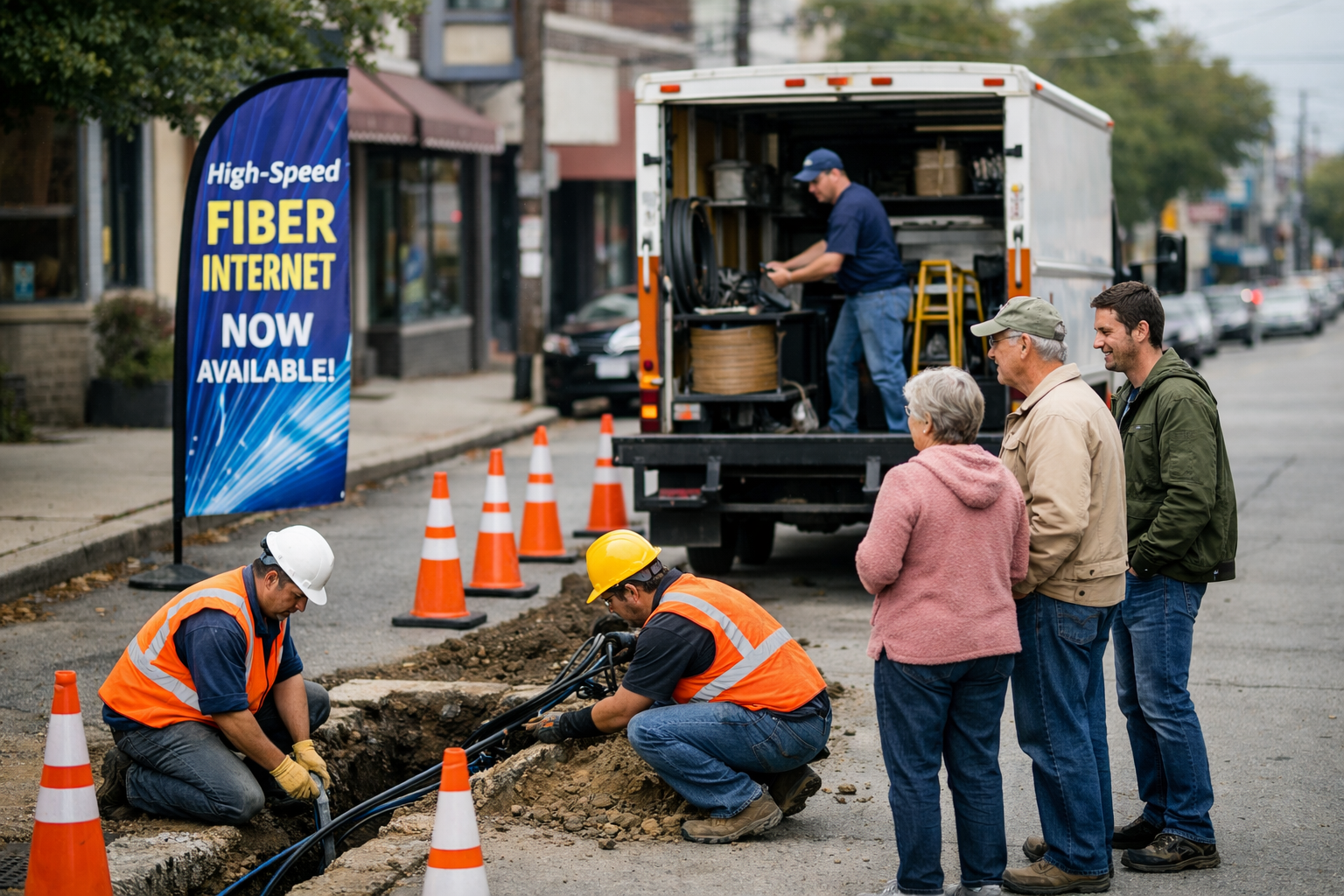
Your network is built, but coverage data is not yet sales-ready. Sales teams are working from outdated maps or calling the office to confirm serviceability on individual addresses. Marketing campaigns target homes outside the live footprint. Canvassing crews work areas where service has not gone live yet.
Every hour of wasted sales effort at this stage costs you a lead and an order opportunity. A well-maintained serviceable address database, kept current through every phase of construction and updated the moment passings go live, is what makes coverage data usable for sales the day a street is ready rather than days or weeks later.
Stage 1: Order capture
The moment a customer wants to sign up, friction in that process costs you conversions. Channel fragmentation means online, phone, and door-to-door orders are not talking to each other. Manual qualification checks add lag before a customer can even confirm they can subscribe. Orders get stuck in pending status or require follow-up calls that never happen.
For greenfield operators in a build phase, this stage is particularly high stakes. The construction window is when resident awareness is highest and intent to switch is strongest. Capturing those orders efficiently, across every channel, is the difference between a strong penetration rate at launch and a slow ramp that takes months to recover.
Stage 2: Scheduling and dispatch
This is where technician capacity quietly evaporates. Manual routing wastes a significant share of daily driving time on inefficient patterns. Jobs get assigned to technicians without required certifications. Parts availability is not confirmed before scheduling, forcing reschedules that delay both the current customer and everyone else in the queue that week.
Stage 3: Customer installation
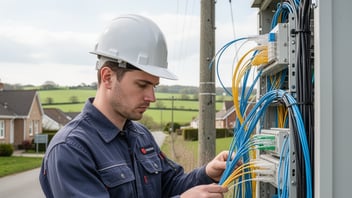
The physical installation is where all the preparation failures from earlier stages surface at once. Missing equipment means a second truck roll. Paper work orders cannot be updated in real time. Technicians cannot access installation history for a property from their phone. Customer sign-off gets captured on paper and has to travel back to the office before the job can formally close.
Stage 4: Provisioning and activation
Service goes live here, or it stalls. Operators locked to OEM-specific provisioning tools wait for remote teams to complete activation while the technician sits on-site burning time. Configuration errors discovered after the tech leaves require callback visits that cost as much as the original install. The customer experience starts badly before they have used the service for a single day.
Stage 5: Billing
Delay at this stage means lost revenue you will never collect. Manual billing triggers, data re-entry between systems, and disconnected activation records mean operators using patched-together systems wait 7 to 14 days after installation before the first invoice goes out. For operators with unified platforms, billing starts the same day the install finishes.
Industry data puts the average total cycle time from service available to first invoice at 21 to 45 days. Best-in-class operators complete the same cycle in 7 to 10 days. That gap is not a technology advantage. It is an operational one, driven entirely by whether information flows automatically between stages or has to be handed off manually at each step.
The case for a unified platform
Most fiber operators inherit or assemble a stack of disconnected systems. GIS data lives in one place, sales uses something else, scheduling runs in a different tool, provisioning is locked to OEM software, and billing operates separately. Each system might work adequately on its own, but every handoff between them is a point where data gets lost, re-entry introduces errors, and time disappears.
A unified OSS/BSS platform eliminates those handoffs. Coverage data flows into sales tools automatically. Orders route directly into scheduling. Field completion triggers provisioning. Activation starts billing. One system, one source of truth, and stages that used to take days happen in minutes.
The question every operator evaluating a platform should ask is not how many features are on the checklist. It is how many of those features are native to the platform versus third-party integrations. Every integration point is a potential place where time and revenue get stuck.
Turn Serviceable Addresses into Revenue Faster walks through the full diagnostic framework, including a cycle time calculator, a bottleneck self-assessment by stage, and a detailed breakdown of the platform capabilities that eliminate the most common delays. Download the guide here.
FAQs
What is the average time from serviceable address to first invoice for fiber operators?
Industry data shows the average cycle time from service available to first invoice is between 21 and 45 days for most fiber operators. Best-in-class operators using unified platforms compress this to 7 to 10 days. The difference comes from eliminating manual handoffs across the six stages of the subscriber lifecycle.
What causes delays between fiber installation and billing?
The most common causes are manual billing triggers, data re-entry between disconnected systems, provisioning delays that require technician callbacks, and incomplete account setup at the time of order capture. Each manual step adds days to the revenue cycle, and for operators running multiple disconnected systems those delays stack across every job.
What is a serviceable address in fiber operations?
A serviceable address is a property where fiber service is available and a customer can subscribe immediately. Keeping serviceable addresses accurately classified and accessible to sales teams in real time is what prevents wasted effort on properties that are not yet live and missed opportunities on properties that are.
How do best-in-class fiber operators achieve same-day billing?
Same-day billing requires a connected system where field completion automatically triggers provisioning and billing with no manual steps between. When a technician marks a job complete in the mobile app, provisioning runs automatically, service activates within minutes, and the billing system receives completion data without anyone in the back office having to initiate it.
Why does a unified OSS/BSS platform compress the subscriber revenue cycle?
A unified platform eliminates the manual handoffs between lifecycle stages that cause most of the delay. Coverage data updates automatically so sales tools always reflect current serviceability. Orders flow into scheduling without re-entry. Field completion triggers provisioning and billing. When all stages run in one connected system, the cycle that takes weeks in a fragmented stack takes hours or days.