
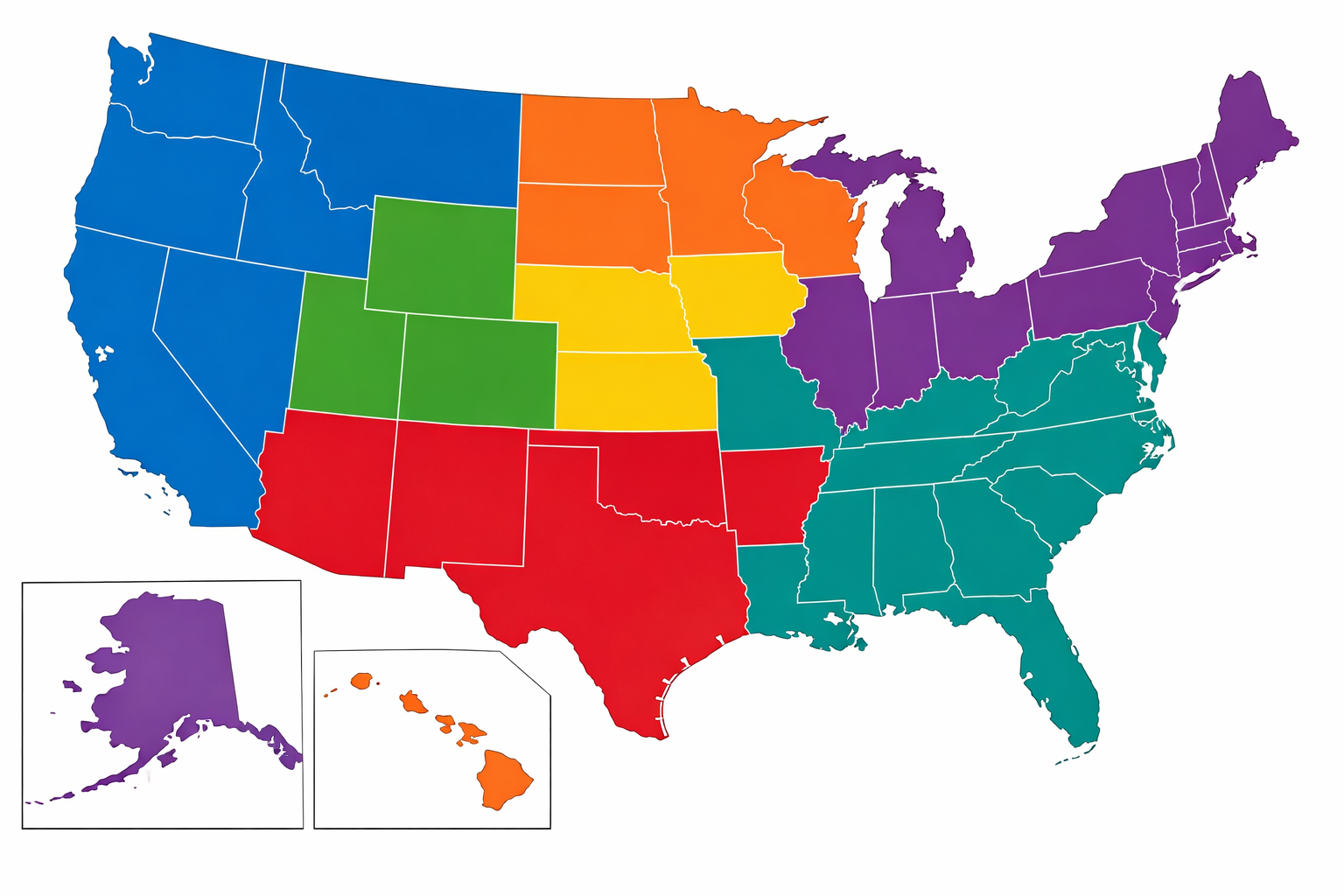
Most greenfield fiber operators design sales territories the same way they designed everything else before the network existed: on a map, by hand, based on rough geographic estimates.
The problem is that a completed fiber build doesn't follow geographic estimates. It follows construction phases, permitting realities, and address-level serviceability classifications that change week by week as the build progresses. A sales territory drawn before construction started reflects none of that.
The result is field reps working addresses that aren't serviceable yet, skipping areas that went live last week, and spending drive time crossing back and forth through a territory that was designed around zip codes rather than network coverage. Every one of those inefficiencies has a cost, and in a greenfield market where you have a limited window to convert residents before a competitor arrives, the cost compounds quickly.
This post covers how to build sales territories that reflect your actual network, how to keep them current through the build, and how the same data that powers your coverage analysis should be driving your sales deployment.
Why Geographic Estimates Fail in a Fiber Build
A zip code or county boundary tells you where people live. It tells you nothing about where your network is live, where it's coming in the next 60 days, or where it isn't planned at all.
Sales territories built on geographic boundaries create three predictable problems.
The first is wasted effort. Reps knock on doors in areas that won't be serviceable for months. Those conversations aren't completely wasted, but they're not closable either. A rep spending half their day in pre-build areas that have no pre-order mechanism attached to them is generating interest with nowhere to put it.
The second is missed opportunity. Areas that went live in the last construction phase may not be reflected in territory assignments until someone manually updates a spreadsheet. Residents in those pockets who haven't been contacted yet are making decisions about their internet service in the meantime.
The third is overlap and gaps. Without address-level data informing territory boundaries, two reps cover the same street while a block two miles away sees nobody for weeks.
What a GIS-Informed Territory Looks Like
A sales territory built on GIS coverage data starts with the address database, not a map of city limits. Every address in the planned footprint has been geocoded and classified: serviceable now, pre-build active, pre-build planned, or out of footprint. Territory design uses those classifications as the building blocks.
A well-structured greenfield territory has three layers.
The first layer is the live zone. Addresses where service is available today and a rep can walk up to the door and close an order on the spot. This layer should be the primary focus of a field sales rep's day. Every address in it is a closable opportunity.
The second layer is the near-term pre-build zone. Addresses where construction is underway and service is available within a defined window, typically 30 to 90 days. These addresses support a specific conversation: here's what's coming, here's when, here's how to lock in your plan now so you're activated the day we go live. Reps in this layer should have a pre-order capture mechanism in their app so that commitment can be taken on the spot.
The third layer is the longer-term pipeline. Addresses where service is planned but further out. This layer doesn't typically justify door-to-door effort yet, but it should have automated lead nurture running so that interest is captured digitally and held until the area becomes active.
Designing territories around those three layers means reps always know what conversation they're having at each door, and every conversation has a next step attached to it.
How Territory Design Connects to the Address Database
The reason most greenfield operators don't design territories this way isn't that they don't want to. It's that they don't have the address-level data infrastructure in place to support it.
Territory design built on GIS coverage data requires that your address database is already built, geocoded, and classified before sales deployment begins. If that foundation isn't in place, you're back to drawing zones on a map by hand.
When the address database is current and connected to your sales tools, territory design becomes an output of the data rather than a separate exercise. You know exactly how many live addresses are in each zone, how many are pre-build active, and how the mix will shift over the coming weeks as construction phases complete. That visibility lets you size territories appropriately, balance workloads across reps, and redraw zones as the build progresses without starting from scratch each time.
It also lets you spot concentration problems before they affect performance. A territory that looks balanced on a map may have 80 percent of its live addresses on three streets if the network rolled out through a specific corridor first. A rep working that territory needs to know that so they can focus effort where the opportunity actually is.
Keeping Territories Current Through the Build
Territory design in a greenfield deployment isn't a one-time activity. A build covering multiple phases completing over weeks and months means the serviceability map is changing continuously.
The practical implication is that territory assignments need to update as construction progresses. An area that was entirely pre-build when territories were first drawn may be mostly live six weeks later. The reps covering that area need to know that. Their tools need to reflect it. The conversations they're prepared to have need to match the actual status of each address they're approaching.
Manual territory updates don't keep pace with construction. By the time a sales manager updates a spreadsheet to reflect a completed phase, reps have already been working that area with outdated information for days.
The answer is territory management connected to the same address database that construction milestone updates feed into. When a phase completes and addresses update to serviceable, that change flows through to the sales tools those reps use in the field. The territory doesn't need to be redrawn. The data underneath it updates automatically.
How AEX One Connects Coverage Data to Sales Deployment
AEX One connects GIS coverage analysis and address database management directly to field sales deployment. Coverage data from Esri ArcGIS integration flows into address classification. Build vs. pre-build status updates propagate automatically as construction progresses. Field reps working through AEX Field Squared see live serviceability at every address before they knock on the door, and pre-order capture is built into the same mobile workflow so that a commitment taken at a pre-build address goes directly into the queue rather than a notebook.
Sales territory design is one of six planning disciplines that determine how quickly a completed build reaches stable revenue. The full picture of how coverage planning, address management, pre-order pipeline management, and operational readiness connect sits in the greenfield fiber network planning guide.
Frequently Asked Questions
What is sales territory design in a greenfield fiber deployment? Sales territory design for fiber operators is the process of dividing a planned service area into geographic zones for field sales deployment, using address-level serviceability data rather than rough geographic boundaries. Effective territory design ensures that every address a rep visits is either serviceable now or has a defined pre-order path attached to it.
Why is GIS data important for sales territory design? GIS coverage data provides address-level serviceability classifications that tell a sales team exactly which doors can be closed today, which should go into a pre-order pipeline, and which aren't ready for sales activity yet. Without that data, territories are drawn on geographic estimates that don't reflect the actual network, leading to wasted effort and missed opportunities.
How often should sales territories be updated during a fiber build? Territories should update continuously as construction phases complete and addresses move from pre-build to serviceable. In practice, this means connecting territory management to the address database so that status changes flow through to sales tools automatically rather than relying on manual updates that lag behind construction progress.
How does sales territory design connect to pre-order management? Territory design and pre-order management share the same underlying address data. Pre-build addresses in a sales territory should have a pre-order capture mechanism attached so that a rep can take a commitment on the spot. When that area goes live, the pre-order converts automatically without requiring the rep to return and re-close the sale.
What is build vs. pre-build classification in a sales context? Build vs. pre-build classification assigns each address in a planned footprint a status that tells field reps what conversation to have and what outcome they can drive. A live address supports an immediate order close. A pre-build active address supports a pre-order conversation. A longer-term planned address may support interest capture only. Having that classification visible in the field sales app before a rep knocks on the door eliminates guesswork and wasted conversations.
How does sales territory design connect to BEAD subscriber uptake requirements? BEAD-funded operators typically face subscriber uptake benchmarks within defined windows after network completion. Sales territories designed around live and near-term pre-build addresses, with pre-order pipelines converting automatically on go-live, support faster subscriber acquisition from day one. Operators who deploy sales teams into well-structured territories before construction completes arrive at go-live with committed subscribers already in the queue.